Statistics

2.06.2011

So what can you do with tomato, vodka and hot pepper besides make a Bloody Mary?? Pasta alla Vodka!!

Yesterday my cousin Linda wrote this on my wall in Facebook.


I am very happy to oblige! Linda, this one’s for you! Enjoy!
But before I present the recipe, a little historical note! The classic name for this recipe is “Penne alla Vodka”, which is not a traditional Italian recipe with hundreds of years of history, like the "Menesta maritata" I made several days ago. Instead, It is one of the recipes that represent Italy's answer to the Nouvelle Cuisine, a new trend in cooking that started in France in the early 1970s. "Penne alla Vodka" came into vogue during the 1970s. Rather than geographic, its origins might be termed as "social".
The 1970s were years of protest, turmoil and change in most of the western world. And while we are all familiar with the civil rights movement in the US and the student protests in the US and Europe that marked political and social change, we rarely think about how these changes also affected other aspects of our life-style. The theme of those years was a break with tradition, change, renewal... and this even affected trends in cooking. The new generation borrowed from tradition but the ingredients were more "modern".. as were the results!  “Penne alla Vodka” was was of these new entries. A modern twist on the more traditional Penne al pomodoro (Penne with tomato sauce)... a bit irreverent much like new generation of that period

Ok.. enough of my 2 cent sociology and on to the recipe!

1 small can plum tomatoes, pureed
1 T butter
1 onion
about 1 oz of pancetta
about 2 oz grated Parmesan
1/2 cup vodka
1/3 cup cream
hot pepper
salt and pepper to taste
1lb penne (I used ziti)


Put a large pot of water for the pasta on to boil.
Coarsely chop the onion
cut the pancetta (you can substitute with bacon or canadian bacon, I used speck)
break the hot peppers in half.


Melt the butter in a large fry pan. Add the onion, pancetta and hot pepper and sauté for 3 or 4 minutes over medium/high heat.  When the onion is translucent add the vodka and allow the alcohol to evaporate

Add about 1 cup of the pureed tomatoes  to the fry pan, salt and pepper to taste and allow it to cook over med/high heat, reducing it to a thick sauce (this will take about 5-8 min).


By now your water will be boiling, so salt the water and put the pasta in to cook (zitti or penne usually take about 10 min to cook)
While the pasta is cooking, add the cream (I used a low fat yogurt based cream, you can use light cream, fat-free half 'n half, etc) and the grated Parmesan cheese, stir in the cream and the cheese so that you have a well mixed creamy sauce.

Taste, and adjust seasoning if necessary. You should really taste the hot pepper!!

By now the pasta should be cooked "al dente". Drain it well and add it to the sauce in the fry pan.  
Toss the pasta so that it is evenly coated with the delicious, spicy vodka sauce and...


as Julia Child would have said, had she spoken Italian


BUON APPETITO!

Tomato, hot pepper, vodka.. Bloody Mary?... No, Pasta alla Vodka!


1 small can plum tomatoes, pureed
1 T butter
1 onion
about 1 oz of pancetta
about 2 oz grated Parmesan
1/2 cup vodka
1/3 cup cream
hot pepper
salt and pepper to taste
1lb penne (I used ziti)


Put a large pot of water for the pasta on to boil.
Coarsely chop the onion
cut the pancetta (you can substitute with bacon or canadian bacon, I used speck)
break the hot peppers in half.


Melt the butter in a large fry pan. Add the onion, pancetta and hot pepper and sauté for 3 or 4 minutes over medium/high heat.  When the onion is translucent add the vodka and allow the alcohol to evaporate

Add about 1 cup of the pureed tomatoes  to the fry pan, salt and pepper to taste and allow it to cook over med/high heat, reducing it to a thick sauce (this will take about 5-8 min).


By now your water will be boiling, so salt the water and put the pasta in to cook (zitti or penne usually take about 10 min to cook)
While the pasta is cooking, add the cream (I used a low fat yogurt based cream, you can use light cream, fat-free half 'n half, etc) and the grated Parmesan cheese, stir in the cream and the cheese so that you have a well mixed creamy sauce.

Taste, and adjust seasoning if necessary. You should really taste the hot pepper!!

By now the pasta should be cooked "al dente". Drain it well and add it to the sauce in the fry pan.  
Toss the pasta so that it is evenly coated with the delicious, spicy vodka sauce and...


as Julia Child would have said, had she spoken Italian


BUON APPETITO!

2.02.2011

Pizzoccheri!

Today I made pizzocheri for lunch! I have been wanting to make them all winter. Last week-end I visited my friend Daniela in Pesaro and she made them for dinner one night. They were so delicious that I decided to buy the ingredients as soon as I got home on Monday! The recipe that Daniela made and mine also are a variation of the original recipe which is much richer! This is a recipe from the Valtellina in Lombardia, bordering on Switzerland. Even though I have eliminated a lot of fat from the recipe (by using less cheese and butter), this is still a hearty meal, great for a cold wintry day! It is a great vegetarian dish - sorry vegans you just can't make this without "real" dairy cheese!
The recipe calls for pizzoccheri, a ribbon noodle made with buckwheat flour and water. If you cannot find them at your local Italian specialty shop you can make them using about 2 oz of all purpose flour, 2 oz of buckwheat flour, just enough water to make a stiff dough. Either roll the dough out with a rolling pin into a very thin sheet and cut in to short ribbon noodles. Or use a pasta machine to make wide noodles, then cut them into 5" lengths. You can also substitute whole wheat pasta.

So here we go!

Ingredients for 4 healthy servings

4 to 5 ounces of pizzoccheri
1/2 of a head of curly cabbage
1 large potato
about 2 oz low fat Swiss cheese
about 4 oz of Italian fontina cheese
about 1/2 cup of grated Parmesan cheese
1 Tablespoon of butter
3 - 4 Tablespoons extra virgin olive oil
a couple of fresh sage leaves, which I didn't have so I used about a 1/2 tsp of dry sage
1 clove of garlic, peeled
You will also need a large ovenproof casserole dish.

Procedure:

Put on a large pot of water to boil.
Put the butter, oil, whole garlic clove and sage into a small saucepan and heat until the butter is melted.
Wash the cabbage and cut into small chunks. Peel the potato and cut into a 1/2" dice. Cut the Fontina and Swiss into small dice. Grate the Parmesan.


When the water comes to a boil, add salt then the pasta, potato and cabbage. It should cook about 12  minutes, or until the potatoes are cooked.
If you are using the freshly made pasta, cook the potatoes for about 5 min, then add the cabbage and cook for 5 more min and finally add the pasta and cook for for another 5 min. If you are using whole wheat pasta, proceed based on the instructions on the box - if the cooking time is less than 12 - 15 min, parboil the vegetables separately and then add pasta and finish cooking.


When the potatoes are cooked, you can drain the pasta, cabbage and potatoes and proceed as follows: Layer the cooked pasta and vegetables in the casserole dish, sprinkling each layer with the butter/oil mix, and the cheeses. I usually do three layers of pasta, ending with the butter/oil and cheese.  Put the casserole in the oven, and broil for 5 to 10 minutes or until the top is golden and crunchy.

I couldn't get the video to load, so click on the link below - no comments on my lovely slipper socks please!! ;)))


When it comes out of the oven, it should look somewhat like this!


And.. as Julia Child would have said, had she spoken Italian... BUON APPETITO!!

1.27.2011

A note on Pasta and Broccoli

Today we are having pasta and broccoli again.. one of our favs! 
I am not going to give you the recipe again here, but I thought I would give you some background on this delicious pasta dish that has its roots in Apulia. My recipe is one of many variations of this delicious pasta dish.
Like most traditional Italian pasta, orecchiettehave a long and varied tradition. Some trace this little ear shaped pasta to Provence in France saying that it probably arrived to the ports of Apulia on ships that carried the dried "orecchiette" in great quantities as provisions for the ship's crew. Others trace the roots of this pasta to Hebrew communities - where they were called "Haman's ears"  - in the Sannicandro territory of Bari under the Norman-Svevo dominion in the XII and XIII centuries. Whatever their origin, they are the delicious!

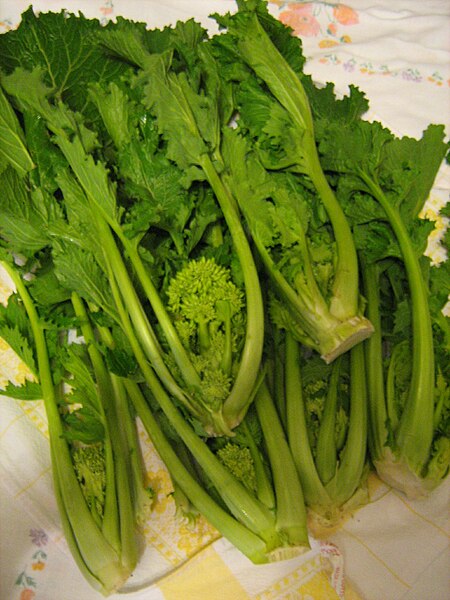
The ingredients for the classic Apulian recipe are cime di rapa - literally turnip tops - and they are just this. The leave and flowerettes of the Brassica rapa silvestris.
Orecchiette  (little ears) - a pasta made with white semolina flour, water and salt. Once a stiff dough is made, it is cut into small pieces then each piece is "strascinato" or dragged against the wood cutting board with the blade of a dull knife. The result is an ear-shaped noodle, hence it's name "orecchiette"

The original recipe also calls for garlic, lots of extra virgin Apulian olive oil, anchovies, hot red pepper and grated aged ricotta cheese (similar to sharp pecorino cheese).

So there you have it!


p.s. the photos are linked from wikipedia. 

1.26.2011

if you have tuna, olives and onions - you have a gourmet meal!

I really wasn't going to blog today - but this pasta and tuna dish that I made for Antonio and myself is so quick, so easy, so delicious that I just could not resist documenting it! It is literally a 10 minute dish!


Ingredients for 2 servings


-      150 gr. (about 5 oz) of white tuna  (I sent my son down to the Pizzicheria to buy it, they sell it in pieces from a huge can, the quality is supreme!)
-      1 or 2 fresh onions (I only had 1, so I added a bit of red onion)
-      Fresh chives, if you have them in the house
-      Cured spicy black olives (you can use green, or even plain black olives)
-      6 oz of spaghettini (thin spaghetti)


Put the water on to boil.
Chop the onions and chives.
Pit the olives.
Put 2 T of extra virgin olive oil in a large fry pan and start to sauté the onions and olives over medium heat.

In the meantime, flake the tuna and add it to the pan. You can put in a splash of dry white wine at this point. I did! Your water will be boiling so put the pasta in to cook. Don't overcook it!


When the pasta is cooked the way you like, remove it from the water directly to the fry pan with a pasta  fork. This way some of the cooking water goes with it so your pasta will not be too dry. If you don't have a pasta fork, you can drain it in a colander and keep some of the cooking water to add to the pan.
Now "salta" the spaghetti to coat with the tuna sauce. That's all there is to it! So remember, if you have tuna, olives and onions in your pantry.. you have a gourmet dish in the making!


and... as Julia Child would have said, had she spoken Italian...


                                                              BUON APPETITO!


1.25.2011

"Menesta maretata"... which became "Italian Wedding Soup"

So why do they call it Italian Wedding Soup... I have yet to see it served at an Italian wedding!!
I did some research... and it looks like what the Italian-Americans call Italian Wedding Soup really started out in Naples as "menesta maretata" or "minestra maritata" or... married greens!! hence the distortion which became Wedding Soup! 
Many of the Italians who emigrated to the United States were from the Campania region - and once in their new country they all became napuletan'... and of course they brought their cooking tradition with them! 
Broad leafed greens are the an important ingredient in Neapolitan cooking: tender young Swiss chard, chicory, escarole, borage and so it should come as no surprise that they came up with this delicious soup in which the greens are happily "married" to boiled meat. The original recipe called for a rich broth made with beef, soup bone, a ham bone, piece of salami, a fresh sausage, a soup chicken and the usual bouquet of soup vegetables. When the broth was done, it was strained and chilled so that all of the fat could be removed. The greens - escarole, Swiss chard, chicory, torzella (a type of curly cabbage) - were prepared. They were put into a big pot of boiling water, when the water came to a boil the heat was turned off and they were left to sit in the hot water, covered for at least an hour. The greens were then served in shallow soup plates, steaming broth was poured over them and it was all topped with the cleaned, boiled meats and grated cheese. 
This "menesta maritata" was praised as early as 1588 by The Marchese del Tufo.
My reference for the above summary is Luciano Pignataro

But let's get back to our wedding soup! Over the years, the younger generations no longer really had a good grasp of the lingo from the "old country" and knew even less about how things were really done in the "old country". It was probably hard to find all of the ingredients  and somewhere along the line "minestra maritata" evolved into "wedding soup" with its own updated recipe.

So here is Italian Wedding soup - or as we kids used to call it "little meatball soup" - the way my mom taught me how to make it. Of course we all add our personal touch, and I no longer fry the meatballs, but cook them directly in the broth.

I apologize in advance for the videos - shot with my left hand while my right hand did the work!! 

Ingredients for 4 people

About 2 quarts of broth. I used vegetable, but chicken, beef or a mix of the two would be even better
1 head of escarole
1 cup of rice (I use whole grain)


1/2 to 3/4 lb lean ground beef (you can use ground turkey or a mix of ground meats)
1 egg
1/2 cup grated parmesan cheese
1/2 cup bread crumbs
1 T Parsley flakes, you can use fresh parsley but you have to chop it really fine.
1 large clove of garlic, finely chopped. I use a garlic press to avoid little pieces of garlic in the meatballs 
                                             salt and pepper to taste


If you are making your broth fresh, start several hours before dinner time.
Put the rice on to cook. This is a good way to use left over, plain unseasoned rice


Clean escarole, cut the leaves into 1-2" pieces


Make your meatball mix: mix meat, egg, cheese, breadcrumbs, garlic, parsley flakes, salt and pepper. I mix it with my hands, you can use a fork but believe me it is easier to use your hands!


Put the broth on to boil.
Form the meat mix into 1" meatballs


When the broth comes to a boil, add the meatballs a few at a time to the broth. When the meatballs are firm and come to the surface, add the escarole. Stir the soup so that the escarole is covered with broth.


When the escarole almost cooked, add the cooked rice. 


Bring to a boil. Lower heat and simmer for about 10 min.


Transfer to a soup tureen and serve with crusty, whole wheat bread.

and... as Julia Child would have said had she spoken Italian

BUON APPETITO!


ps tomorrow I will be working on my "real" job, so here is tomorrow's recipe tonight!